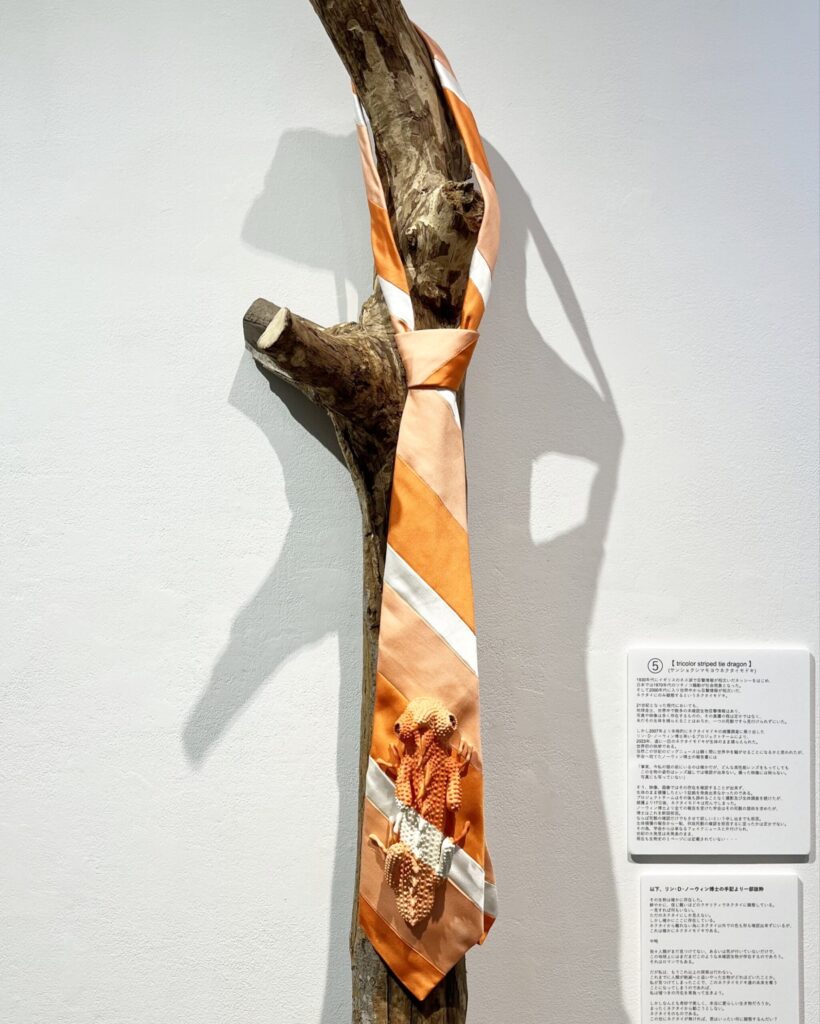
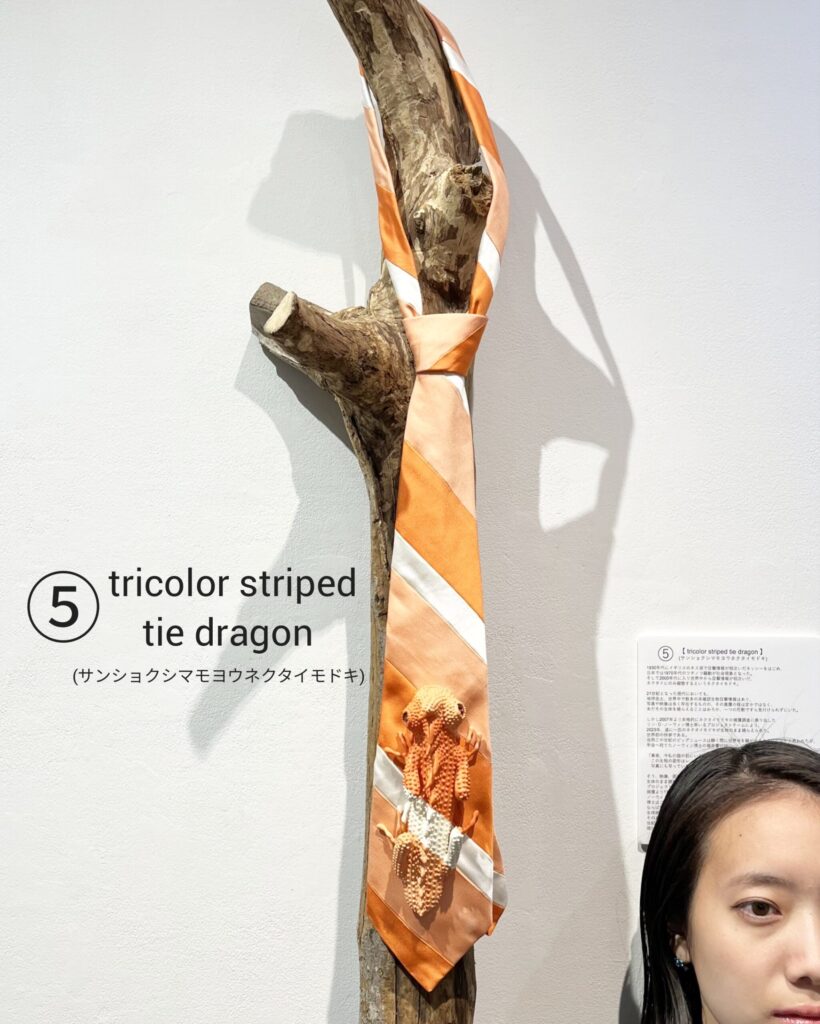
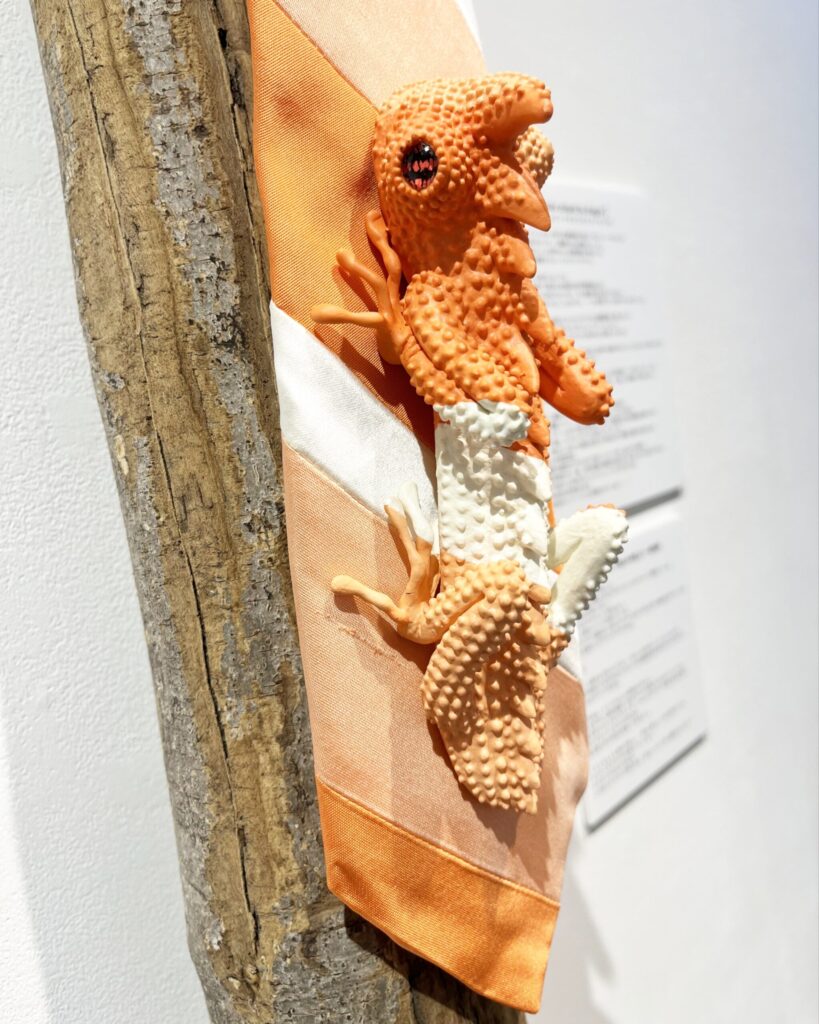
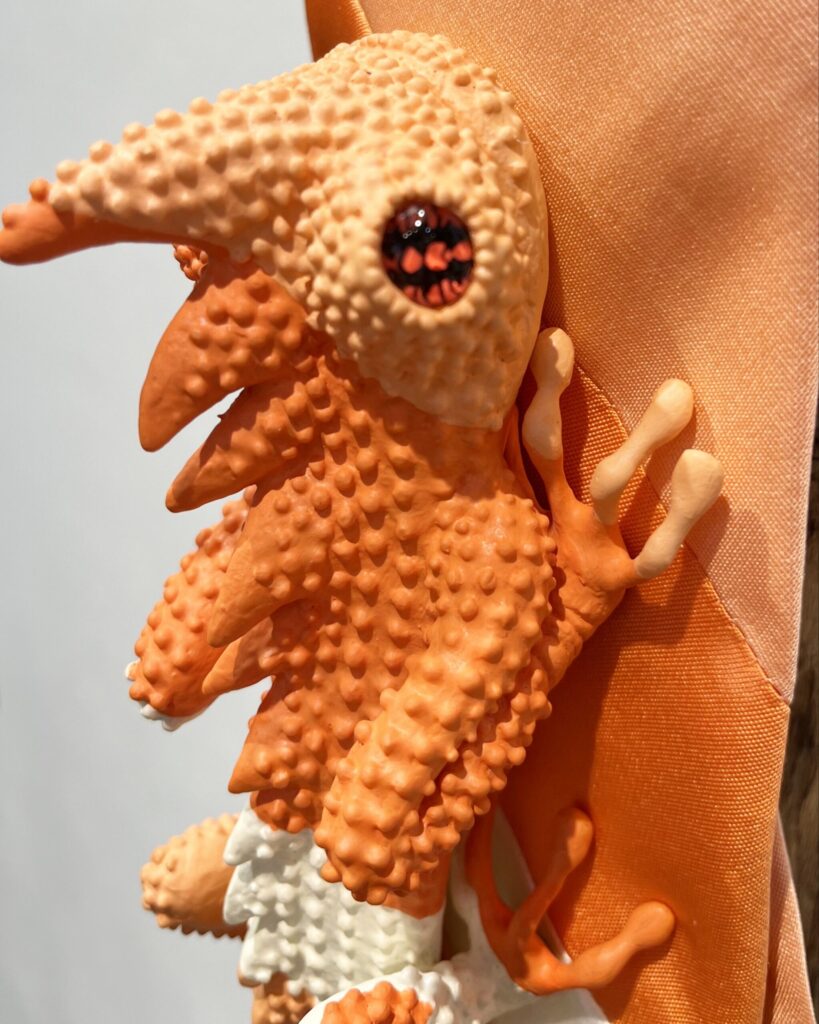
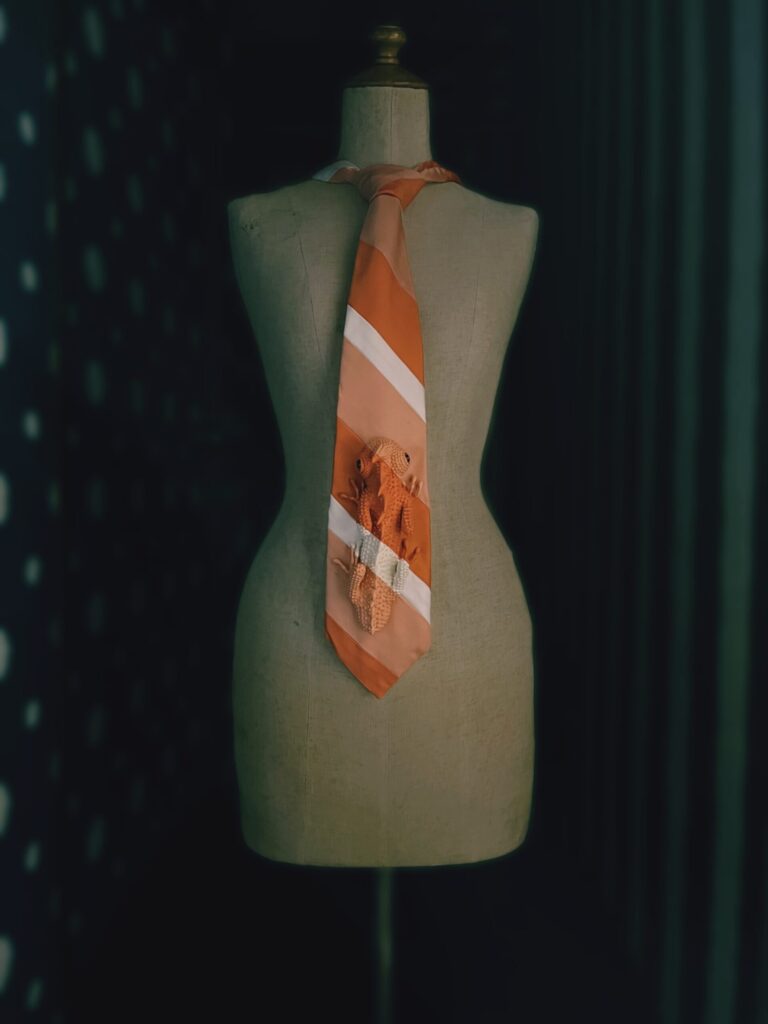
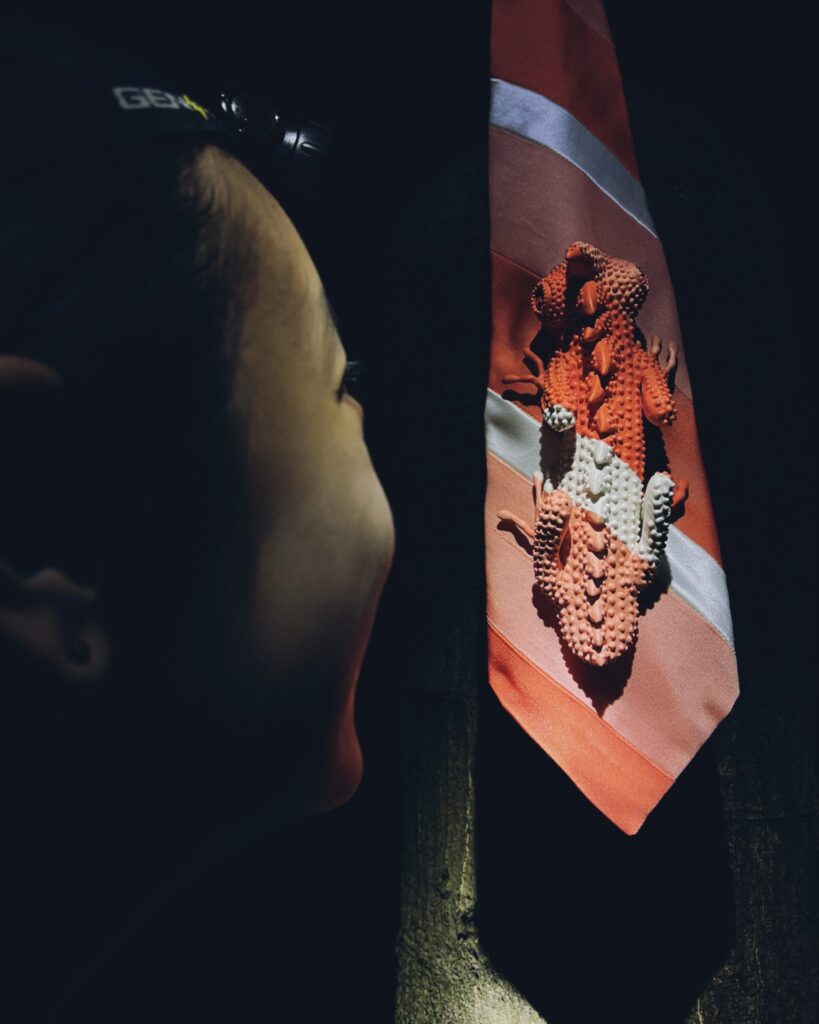
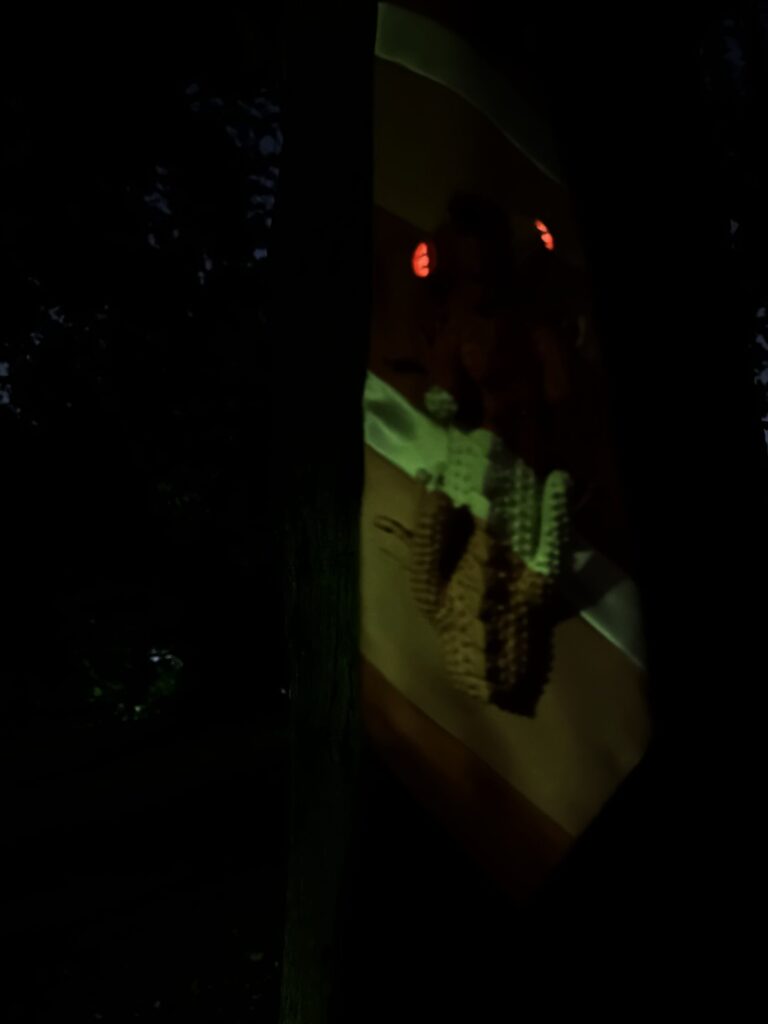

【tricolor striped tie dragon】
(サンショクシマモヨウネクタイモドキ)
2023
Vintage fabric, putty, resin, acrylic paint
Rin Northwind
1930年代にイギリスのネス湖で目撃情報が
相次いだネッシーをはじめ、
日本では1970年代のツチノコ騒動が社会現象となった。
そして2000年代に入り世界中から目撃情報が相次いだ、
ネクタイにのみ擬態するというネクタイモドキ。
21世紀となった現在においても
世界中で数多の未確認生物目撃情報はあり、
写真や映像は多く存在するものの
その真贋の程は定かではなく、
未だその生体を捕らえることはおろか、
一つの死骸ですら見付けられずにいた。
しかし2007年より本格的に
ネクタイモドキの捕獲調査に乗り出した
リン・D・ノーウィン博士率いるプロジェクトチームにより、
2023年、遂に一匹のネクタイモドキが
生体のまま捕らえられた。
世界初の快挙である。
当然この世紀のビッグニュースは瞬く間に世界中を
騒がせることになるかと思われたが、
学会へ宛てたノーウィン博士の報告書には
「事実、今私の眼の前にいるのは確かだが、
どんな高性能レンズをもってしてもこの生物の姿形は
レンズ越しでは確認が出来ない。
撮った映像には映らない。 写真にも写っていない」
プロジェクトチームはその後も諦めることなく
生体調査を続けたが、
捕獲より17日後、ネクタイモドキは死んでしまった。
ノーウィン博士より全ての報告を受けた学会は
その死骸の提供を求めたが、博士はこれを断固拒否。
ならば死骸の確認だけでもさせて欲しいという
申し出までも拒否。
生体捕獲の報告から一転、
なぜ死骸の確認まで拒否するに至ったかは定かでない。
学会からは単なるフェイクニュースと片付けられ、
世紀の大発見は未発表のまま
現在も生物史の1ページには記載されていない・・・
リン・D・ノーウィン博士の手記より
その生物は確かに存在した。
鮮やかに、信じ難いほどのクオリティで
ネクタイに擬態している。
一見すれば何もいない。
しかし確かにここに存在している。
ネクタイから離れないために
ネクタイ以外での色も姿も確認出来ずにいるが、
これは確かにネクタイモドキである。
中略
我々人類がまだ見つけられていないだけで、
この地球上にはまだまだこのような不思議な
未確認生物が存在するのだろう。
それはロマンでもある。
だが私はもうこれ以上の探索は行わない。
これまでに人類がその身勝手さから
絶滅へと追いやった種がどれほどいたことだろう。
私が見つけてしまったことで
このネクタイモドキの未来を奪うことになってしまうのならば、
私は喜んで嘘つきと呼ばれ生きよう。
しかしなんとも奇妙で美しく、
本当に愛らしい生きものだろうか。
まったくネクタイから動こうとしない。
ネクタイそのものである。
この世にネクタイがなければ
君はいったい何に擬態するんだい?
Beginning in the 1930s, sightings of Nessie
in Scotland’s Loch Ness drew
widespread attention,
and in Japan, the Tsuchinoko boom of
the 1970s became a social phenomenon.
Then, in the 2000s,
reports began emerging worldwide
of a mysterious creature said to mimic only neckties
— the Tie dragon.
Even now in the 21st century,
numerous sightings of unidentified
creatures continue to be reported
across the globe.
Many photographs and videos exist,
yet their authenticity remains uncertain,
and not a single confirmed specimen
— not even a corpse
— has ever been secured.
However, in 2007,
a full-scale capture investigation
began under the leadership
of Dr. Rin D. Norwin.
And in 2023, the project team finally
succeeded in capturing a living Tie dragon.
It was a world first.
Naturally, it seemed this historic discovery
would immediately shake the world.
Yet in Dr. Norwin’s report submitted
to the academic community, she wrote:
“It is indeed here before my eyes.
Yet no matter how advanced the lens,
its form cannot be confirmed through it.
It does not appear in recorded footage.
It does not show up in photographs.”
In other words, although the creature
had been captured alive,
no visual evidence could be presented.
The team continued their biological investigation
without giving up,
but seventeen days after capture,
the Tie dragon died.
The academic society requested the remains
for examination, but Dr. Norwin firmly refused.
She even rejected requests merely to view the corpse.
Why she refused verification
after announcing the capture remains unknown.
As a result, the claim was dismissed as fake news,
and this supposed century-defining discovery
was never officially published —to this day,
it does not appear in the recorded
history of life.
From the journal of
Dr. Rin D. Norwin
The creature most certainly existed.
Its mimicry of a necktie was astonishingly vivid
— of almost unbelievable quality.
At first glance, there seems to be nothing there.
And yet, it is undeniably present.
Because it never leaves the tie,
its true coloration
and form apart from it remain unknown.
Still, I am convinced
this is indeed the Tie dragon.
[Excerpt omitted]
There are surely many such mysterious,
unconfirmed creatures on this planet —
species humanity simply has not yet discovered.
That, in itself, is a kind of romance.
But I will conduct no further searches.
How many species has humanity already
driven toward extinction
through its own arrogance?
If discovering it means robbing this creature of
its future, then I will gladly live as a liar.
And yet — what a strange,
beautiful, truly lovable being it was.
It never moved away from the tie.
It was, in a sense, the tie itself.
If ties did not exist in this world…
what would you choose to mimic instead?